
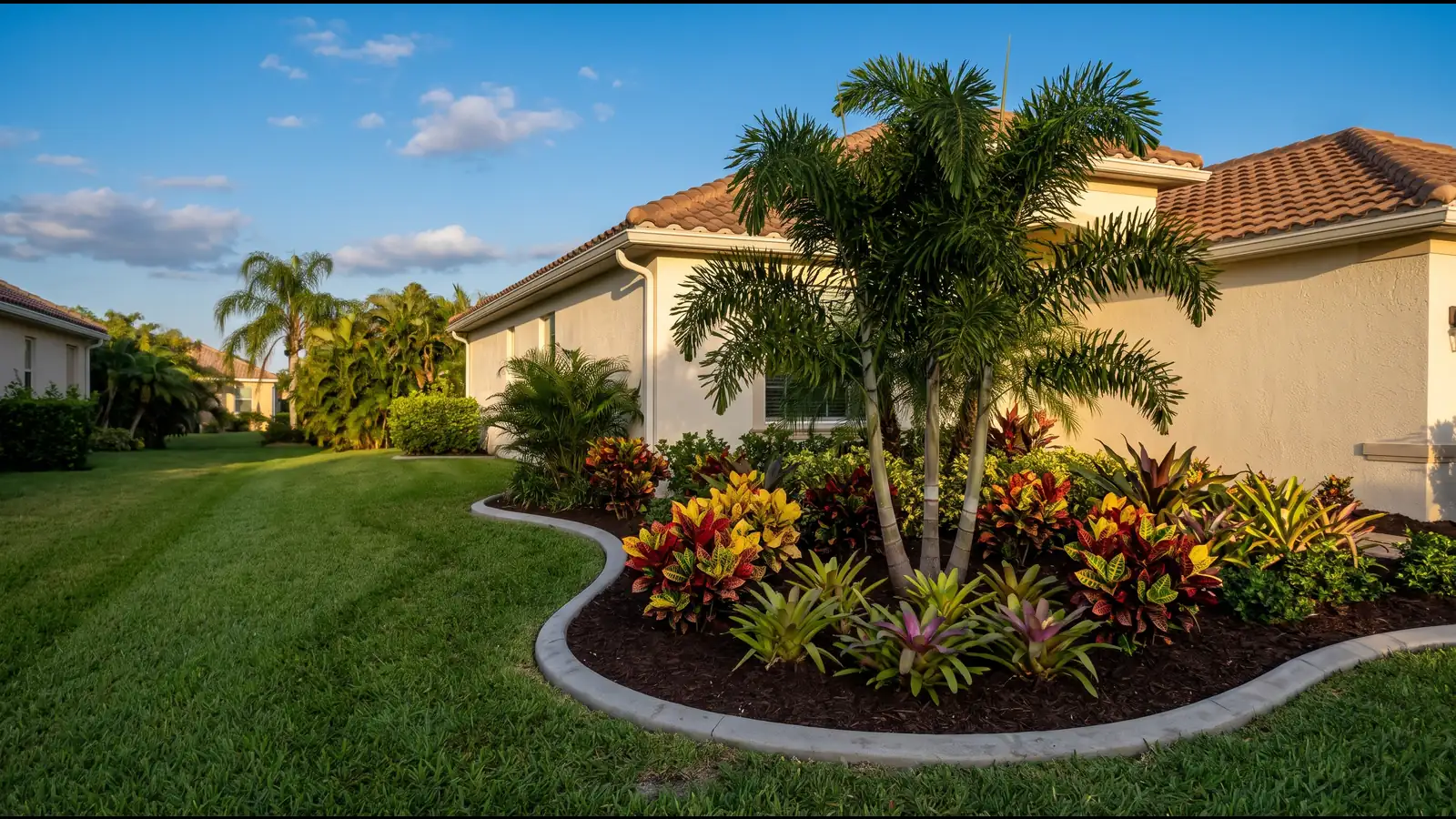
Flower Bed Installation Types for Pompano Beach Yards
The kind of bed decides most of the price: how much digging, how many plants, and whether they get replaced every season or stay for years.
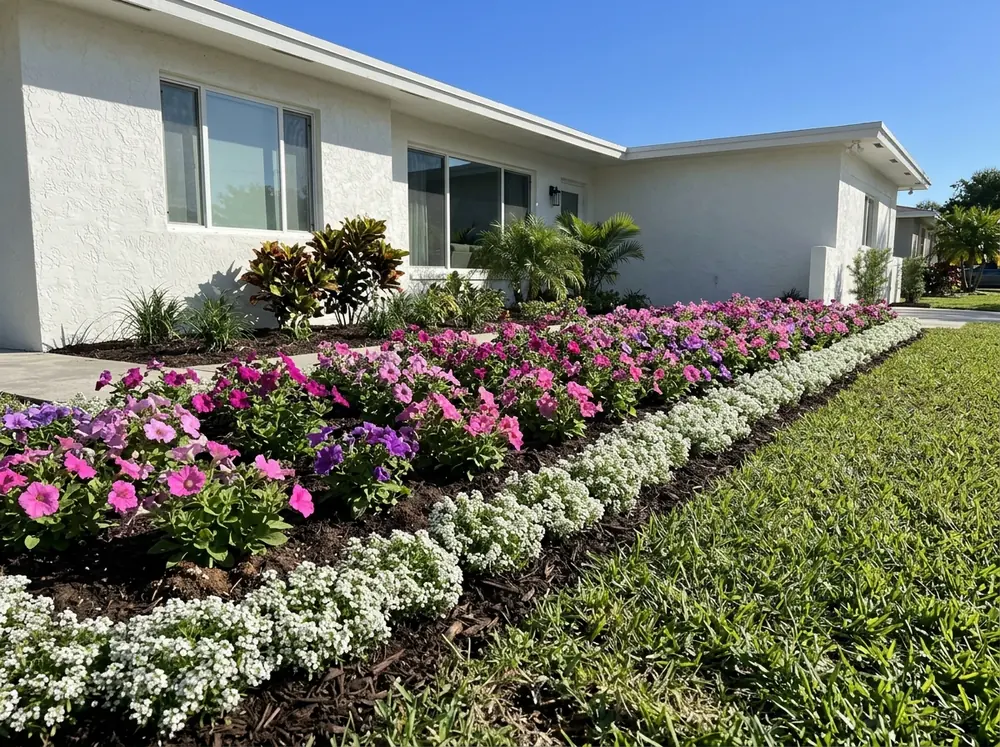
Annual Color Beds
Annuals live one season and need more water and fertilizer than perennials, UF/IFAS notes. South Florida runs the calendar backward: flowers planted for summer up north, such as petunias, snapdragons, pansies and sweet alyssum, go in here for winter. UF/IFAS says to switch beds to winter annuals in November or later, once the heat and humidity ease, and to plant them in full sun.
- Plants: $2 to $50 each, planting labor $30 to $80 an hour (HomeAdvisor)
- Color beds mean a change-out every season, which is usually a maintenance visit, not a new install
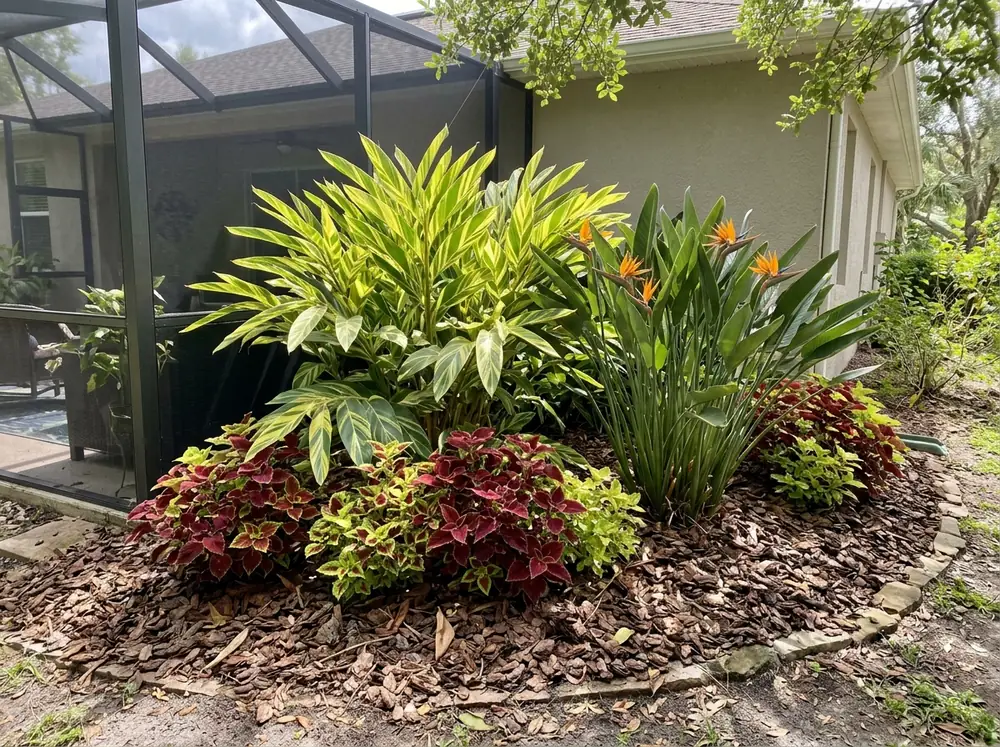
Perennial and Tropical Beds
Perennials stay for years and, once established, use less water and fertilizer than annuals. Most want at least four hours of sun. Some plants treated as annuals up north grow as perennials here: UF/IFAS gives coleus as the example, and says gingers in South Florida usually keep their leaves all year. For a bed built around crotons, bromeliads and other bold foliage, see tropical landscaping.
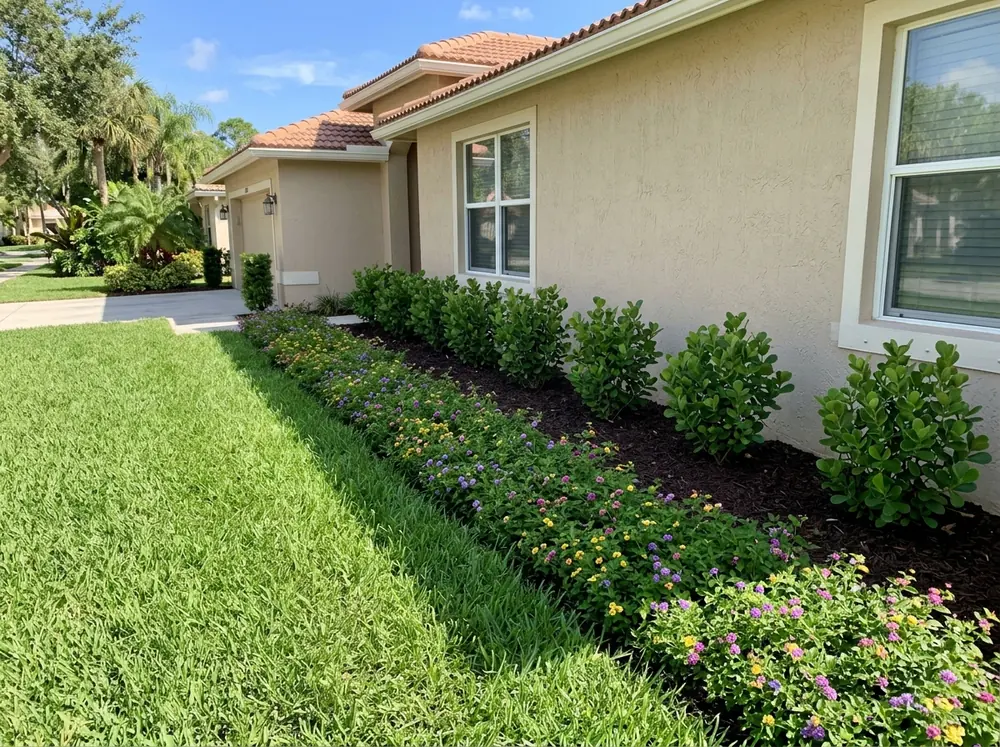
Foundation Plantings
These are the beds along the house. UF/IFAS says to keep the center of each shrub more than 2.5 feet from the foundation. Closer than that, air can't move, fungal disease follows, and you can't get at the wall for repairs. Space shrubs so neighbors touch when full grown, not before.
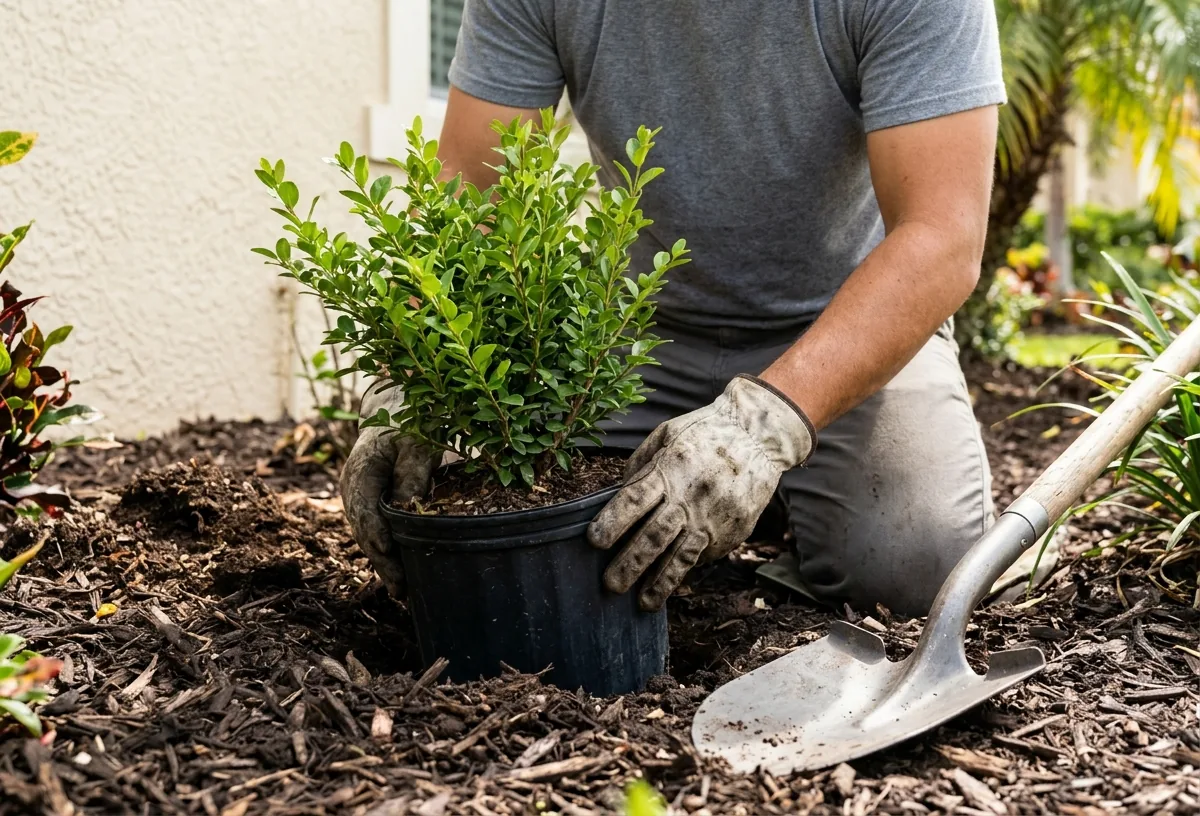
- Hole: at least one and a half times the root ball's width, an inch or two shallower than the ball
- No compost in the hole: it breaks down too fast in sandy soil and heavy rain, so amend the whole bed instead (UF/IFAS)
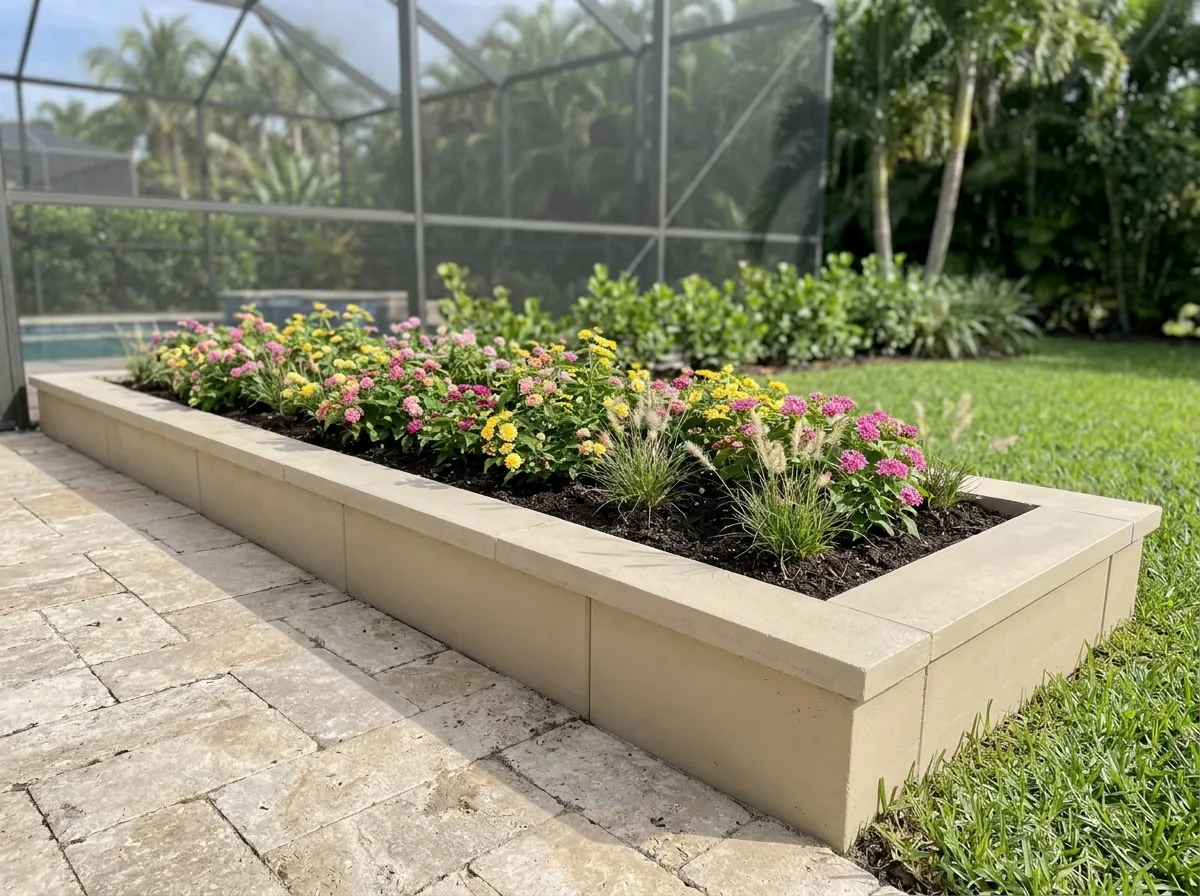
Raised Planter Beds
A raised bed is built up inside a frame. UF/IFAS lists brick, rot-resistant lumber, landscape timbers and concrete block as frame materials, and warns that soil above grade warms up and dries out faster than the ground. Plan a drip line or a spray head for it.
- Raised bed: $200 to $1,500 (HomeAdvisor); Fixr's range of $150 to $800 includes the frame, soil and plants
- For a taller masonry planter that holds back soil, see retaining walls
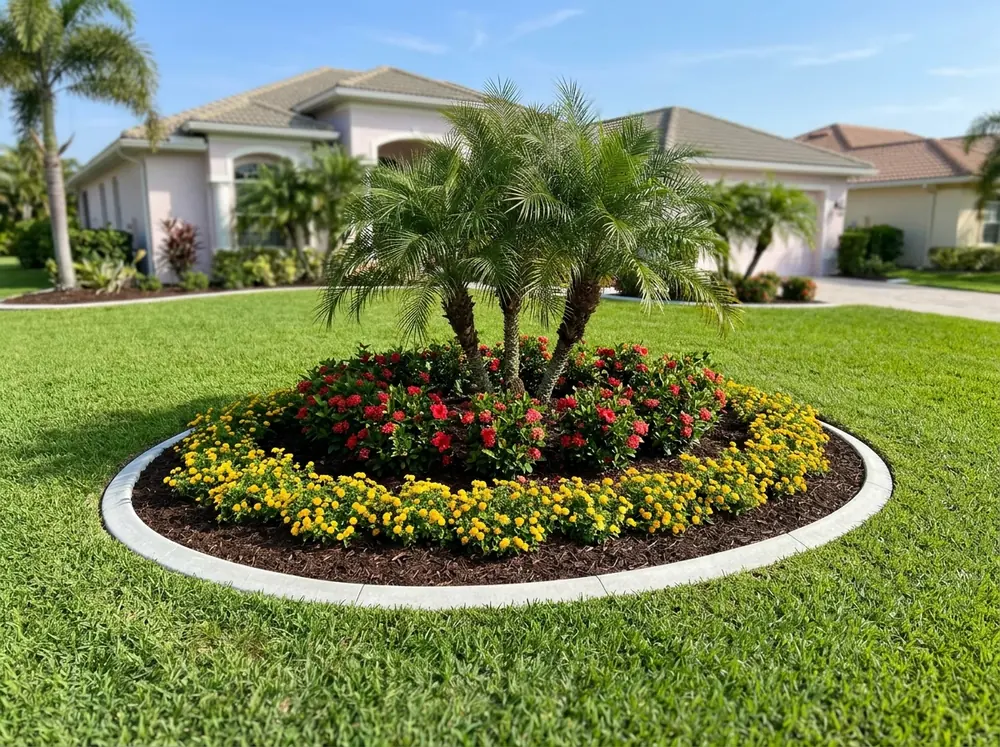
Island Beds
Fixr sorts beds into two kinds: border beds, a narrow strip along a lawn or driveway seen from one side, and island beds that stand alone with no backdrop. Because an island is seen from every side, it needs an edge all the way around. Fixr's high-end example, an 8 by 12 foot island bed with leveling, exotic flowers, weed barrier and a sprinkler system, came to $10,500.
- Edging: $1 to $25 a linear foot, by material (HomeAdvisor). A poured edge is covered under landscape curbing
Why Pompano Beach homeowners call Pompano Landscaping
- One independent landscaper calls back, not a list of five
- You pay nothing to send a request
- Ask for plant species, sizes and sod square footage on the quote
- Ask who books the 811 locate and pulls any tree permit
What a Flower Bed Quote Should List
Dig or no-dig
A no-dig bed sits on top of the old ground; a dug bed has the grass and roots taken out first. The no-dig route saves the sod removal, so it's the cheaper line on the quote.Plants by name and count
Species, container size and quantity, so two quotes compare line for line.Edging, weed barrier and mulch
HomeAdvisor budgets $150 to $500 for the three together. Mulch belongs at a 2 to 3 inch depth.Soil work
Whether the whole bed is amended, which UF/IFAS prefers over filling planting holes with compost.Order of work
UF/IFAS puts planting last, after walkways, irrigation and patios. A quote that plants first and trenches later is backward.Redoing an old bed
Clearing and replanting an existing bed runs $1,500 to $6,000 in Fixr's guide.
Watering a New Bed Until It Roots
UF/IFAS puts shrub establishment at 20 to 28 weeks. South of Orlando, a 3-gallon shrub needs about a gallon every four days in that time, applied to the root ball, ideally before 10 a.m. Hot, dry weeks are the worst time to plant. Under watering limits, UF/IFAS suggests planting at the start of the rainy season.
The city's rules help: new plants get extra watering days for 90 days. Ask the installer to set the zone timer for that schedule and change it back when the window ends.