Privacy Hedge Types in Pompano Beach
The plant decides how tall the screen gets, how wide a strip it needs and how often it will need shaping. Size each one to its mature spread before signing off on a plan.
Clusia
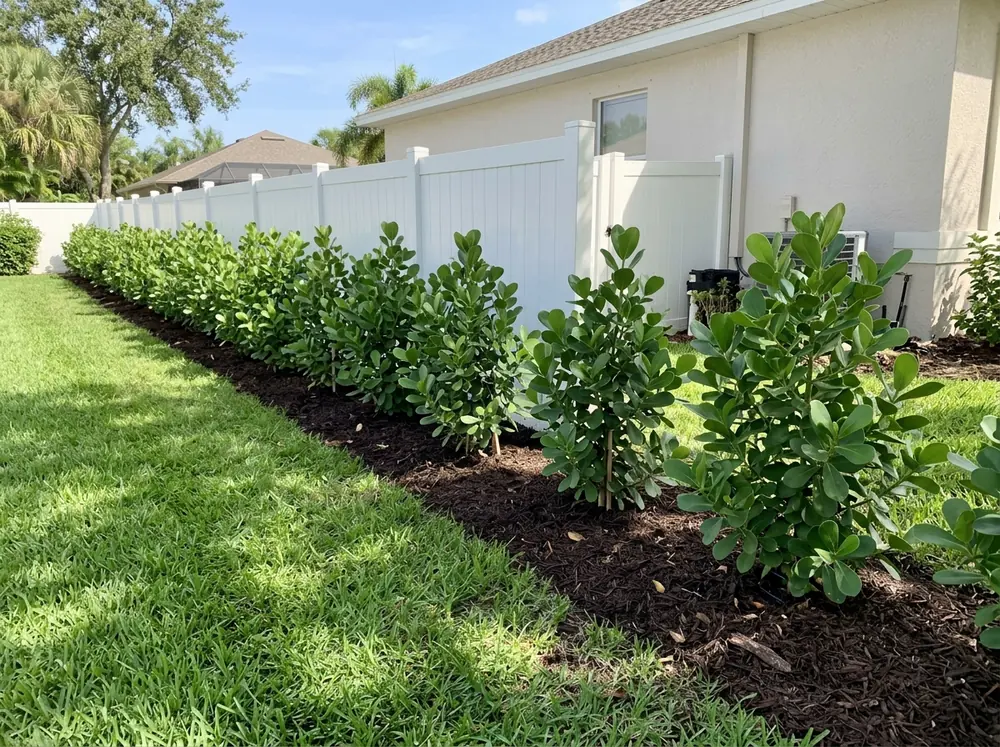
Clusia rosea, or pitch apple, is native to Florida and the West Indies, with high drought and salt-spray tolerance, so it suits yards near the water. It's a tree at heart, though: 25 to 30 feet tall if left alone. Plant it well off walls and driveways.
- Hardiness: USDA zones 10B to 11 (UF/IFAS)
- Mature spread: 15 to 25 feet
Podocarpus
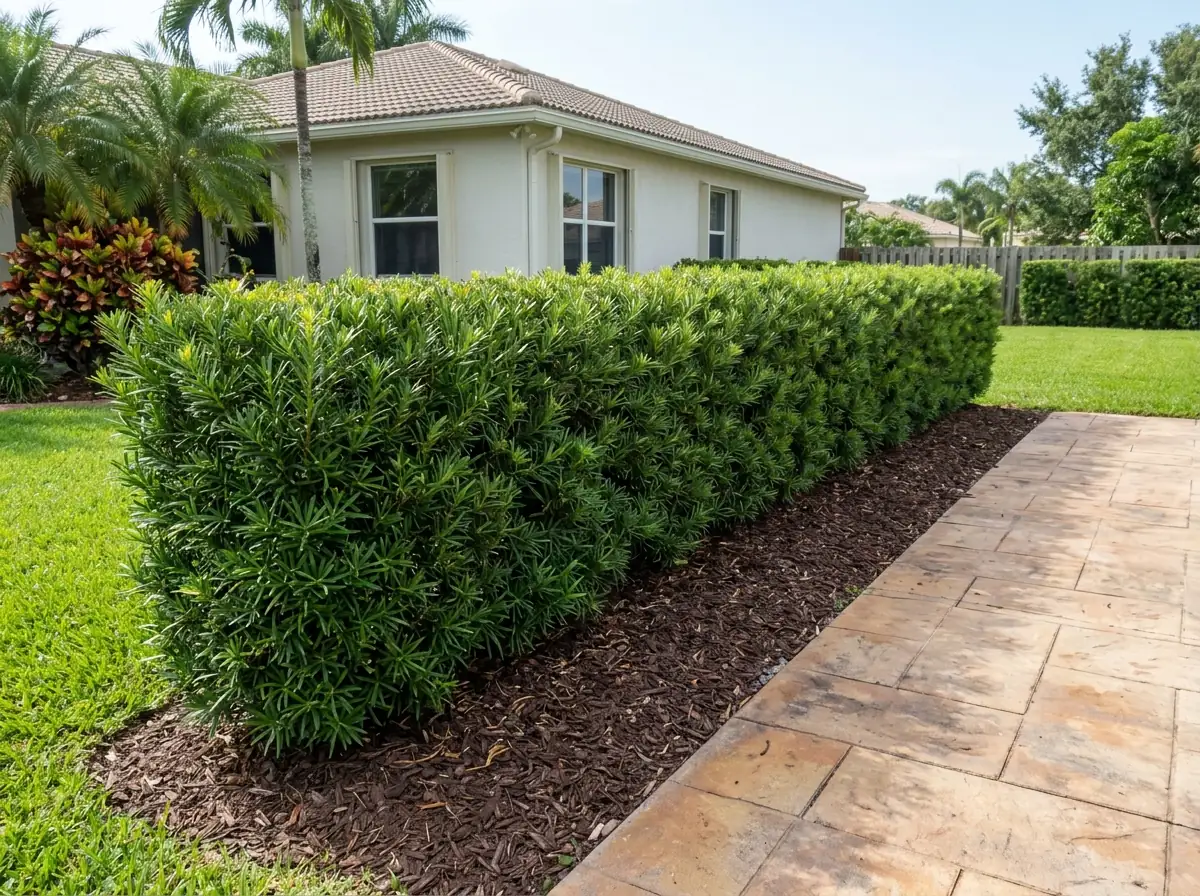
The common pick for a formal hedge. UF/IFAS says most owners keep it at 4 to 5 feet; 'Pringles' is a dwarf that tops out at 3 to 5 feet. Most podocarpus tolerate salt and drought once established, but wet soil causes root rot.
- Spacing: 2 to 4 feet for a formal hedge
- Not on Florida's invasive list
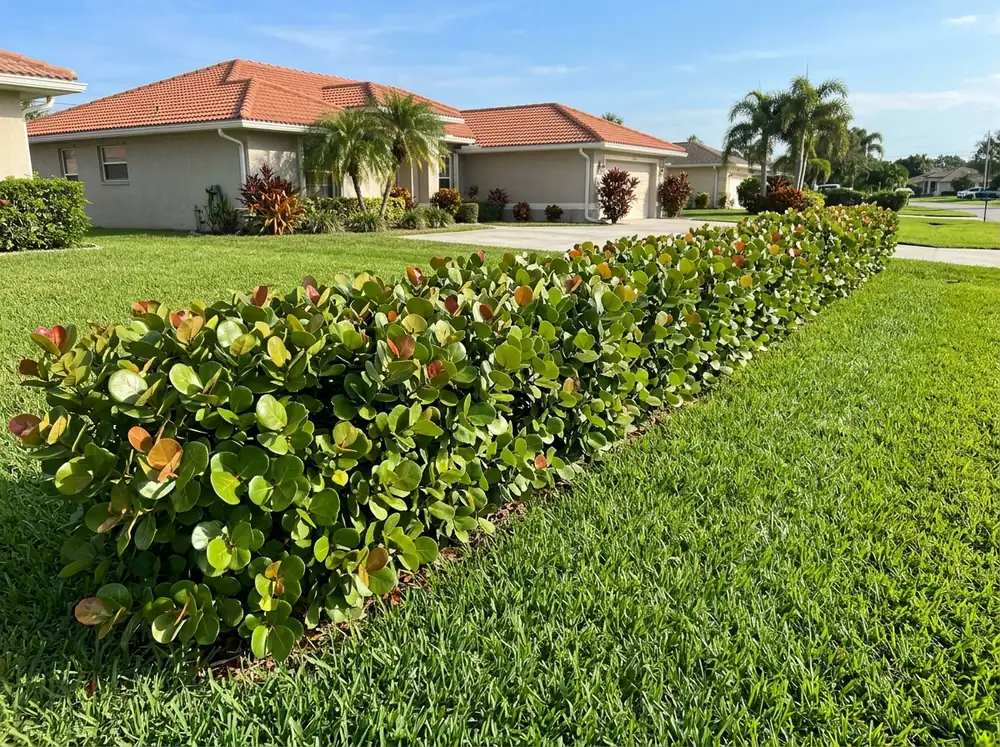
Cocoplum
A Florida native, very salt tolerant once established. Inland types such as 'Red Tip' and 'Green Tip' are kept at 4 to 8 feet; the coastal 'Horizontal' form does better at 3 to 6. Reject pot-bound plants, which tend to get root rot.
- Spacing: 36 to 50 inches
- About a year to a dense hedge
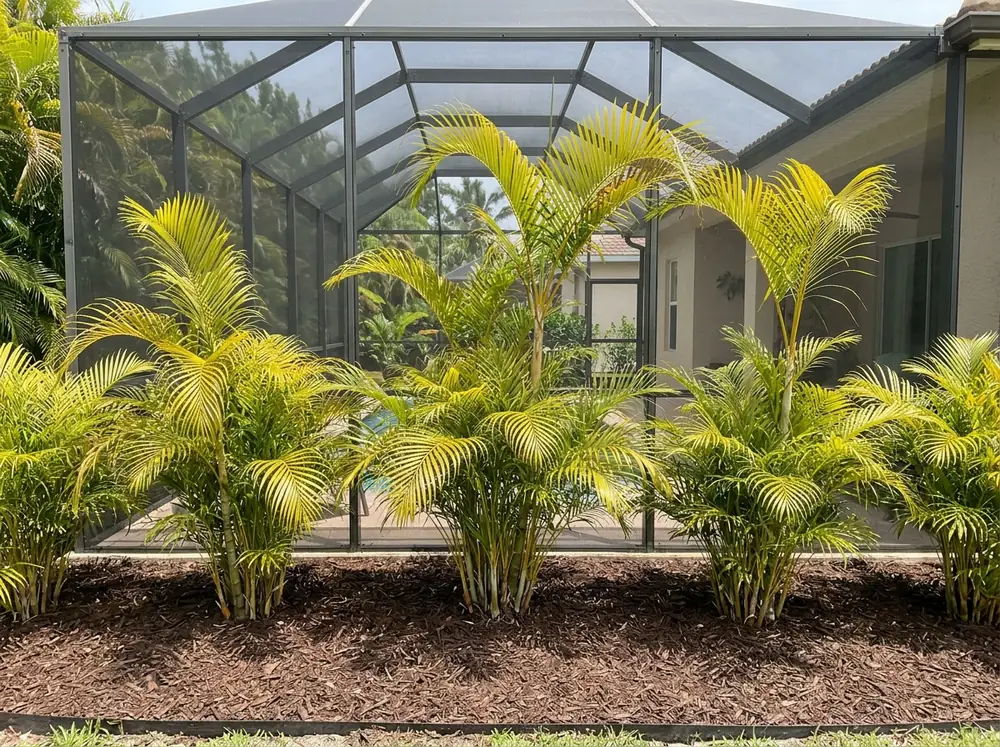
Areca Palm Screens
A clumping palm that makes a tall, soft screen and resists high winds. It reaches 20 to 30 feet and 8 to 10 feet across, so it needs a wide bed. UF/IFAS rates it 'Caution' for South Florida.
- Spacing: 4-foot centers in full sun (UF/IFAS)
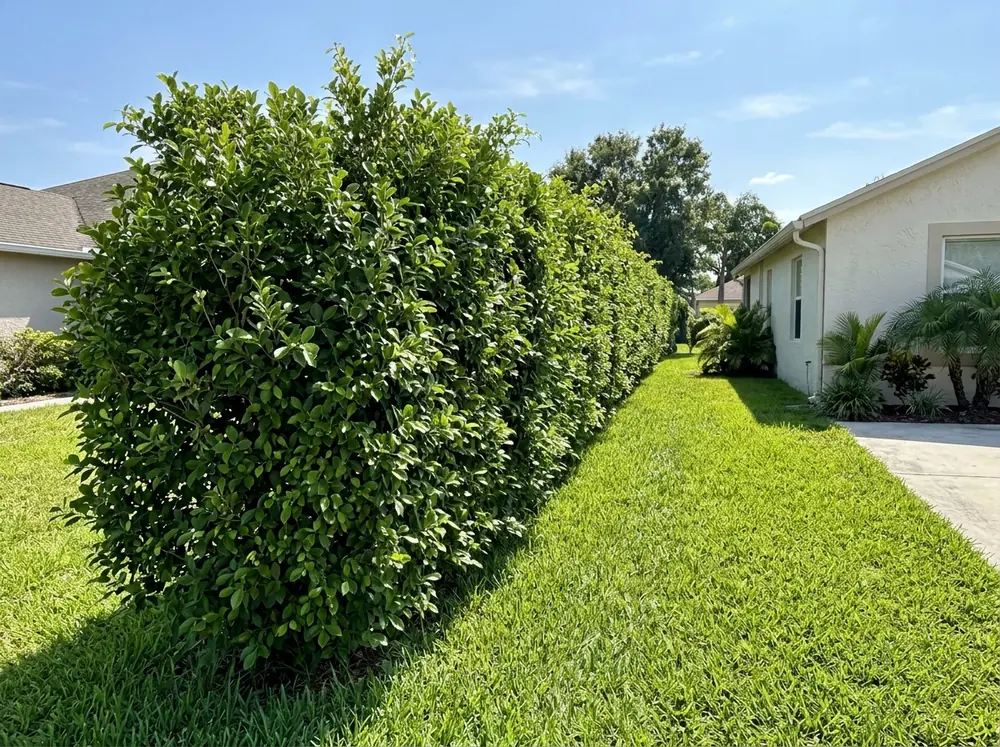
Ficus (Whitefly Warning)
Ficus hedges come with a known pest, the ficus whitefly. It was first found on Ficus benjamina in 2007, hedges across the region lost their leaves, and Miami-Dade extension still took damage calls in 2022. If you keep or replant ficus, budget for ongoing pest checks.
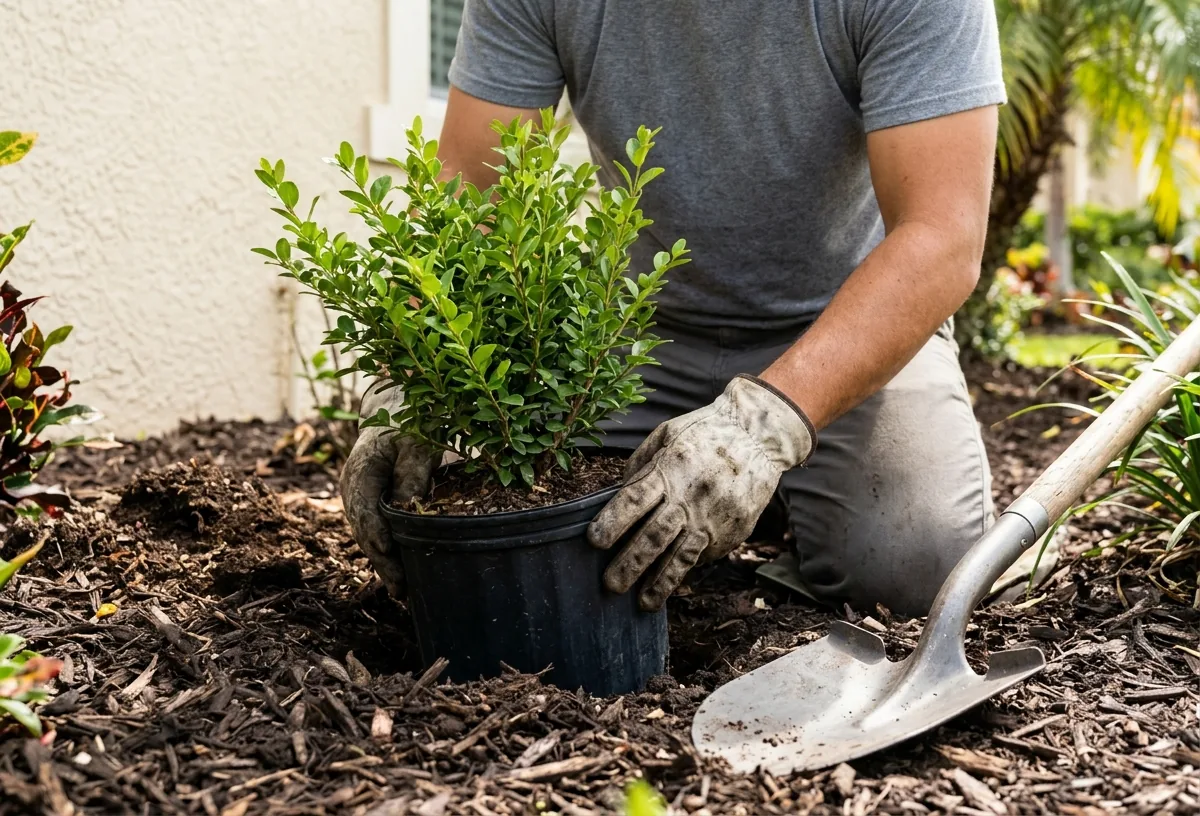
Why Pompano Beach homeowners call Pompano Landscaping
- One independent landscaper calls back, not a list of five
- You pay nothing to send a request
- Ask for plant species, sizes and sod square footage on the quote
- Ask who books the 811 locate and pulls any tree permit
Planning a Hedge Line in Pompano Beach
Leave a gap from the house
UF/IFAS warns that shrubs planted too close to a house cause moisture and maintenance access problems; clusia is the usual offender.Check drainage
Podocarpus gets root rot in poorly drained soil, so a low, soggy strip along a fence is the wrong spot for it.Match the plant to salt exposure
Clusia and cocoplum handle salt spray; on an oceanfront lot see the salt-tolerant plant list.Call before digging
UF/IFAS's podocarpus advice starts with calling 811; a Sunshine 811 locate comes before the first hole.Water it in
New shrubs qualify for the city's extra watering days, and cocoplum needs water for its first five to seven months.
What Sets the Price of a Privacy Hedge
Plant count and container size drive most of the quote. Wholesale prices for native shrubs in Palm Beach County's February 2026 survey were about $3.42 for a 1-gallon pot, $6 for a 3-gallon and $24.83 for a 7-gallon; retail and installed prices run higher. Fixr's plant price list puts shrubs at $6 to $97 each. Container size multiplies across a 100-foot run, so ask for the quote priced in two sizes. Once it's in, a cocoplum hedge takes two or three trimmings a year to hold its shape.
See how native shrubs compare if you'd like a screen that feeds birds and butterflies.