Mulch Installation Types in Pompano Beach
Most beds here get one of four materials. They differ less in price than in how fast they settle into the sand and need topping up.
Pine Bark
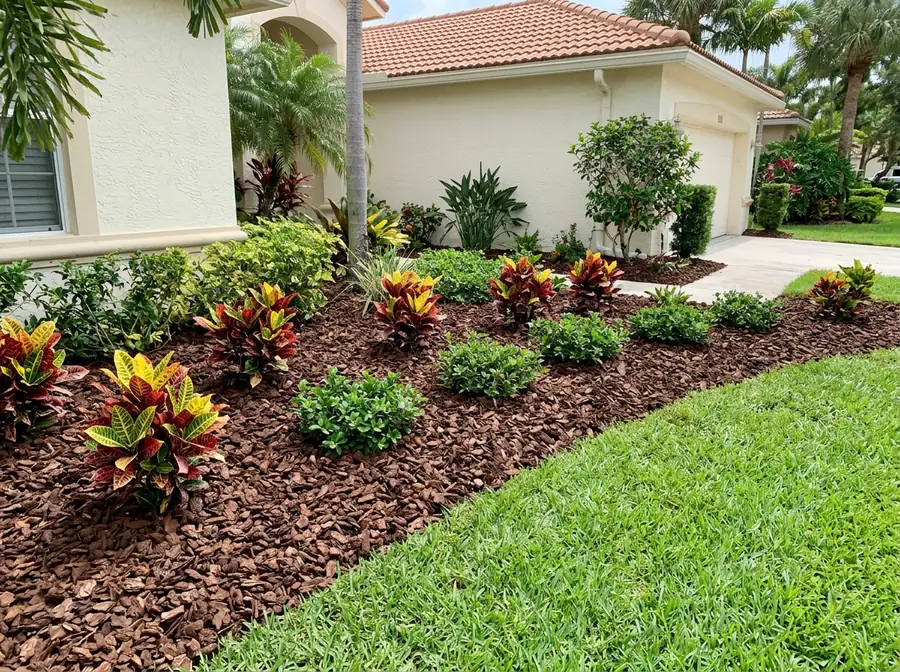
Pine bark is a by-product of the timber industry, sold shredded or as nuggets. It settles slowly: in a UF/IFAS study it still held two-thirds of its starting depth after two years. Fixr warns it can float off where runoff crosses a bed, so it's a poor pick beside a downspout or at the low end of a sloped yard.
- Material: about $30 to $40 a cubic yard (Fixr)
- Dyed red or black bark costs a little more than natural brown (Fixr)
Melaleuca and Eucalyptus Mulch
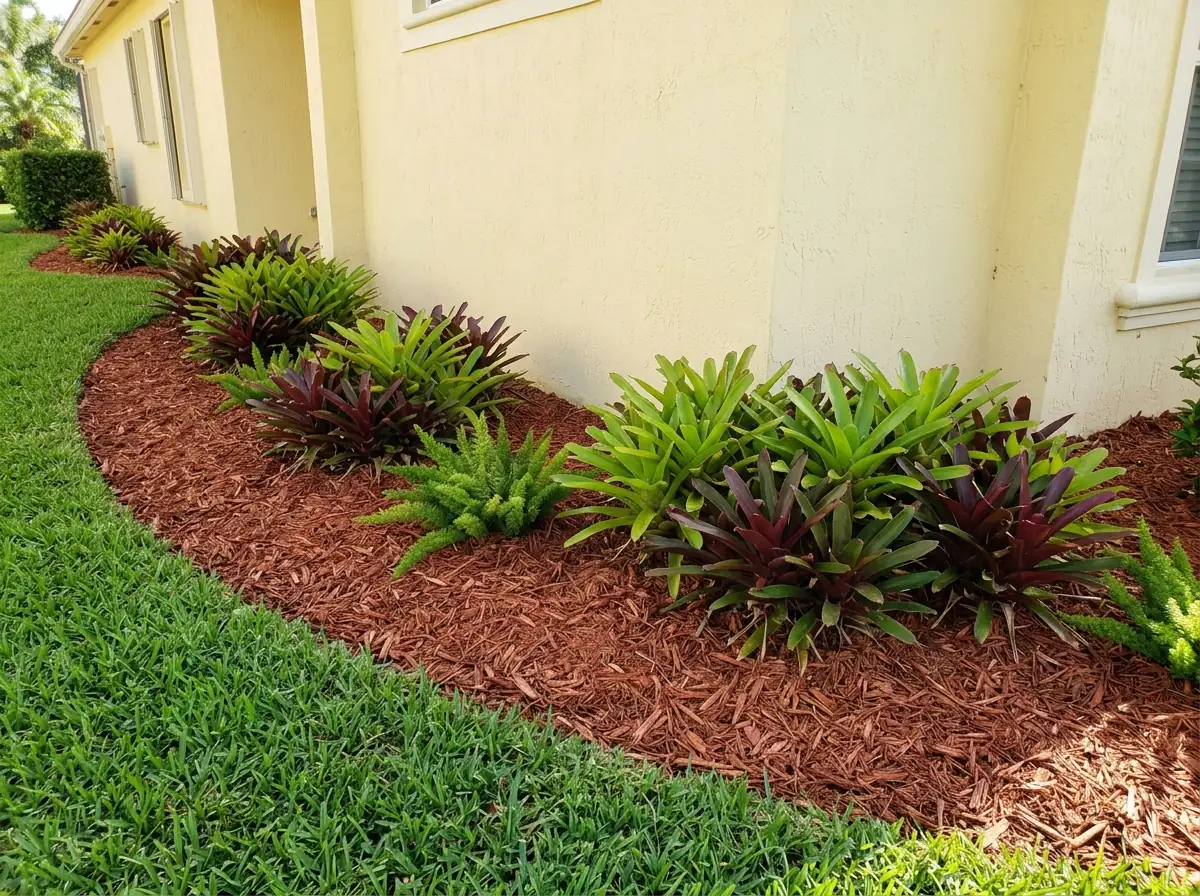
Both give the look of a traditional wood mulch without the cypress. Melaleuca mulch comes from an invasive tree and is heat-cured so its seeds can't sprout; UF/IFAS found it outlasted both pine bark and cypress in a durability study. Eucalyptus mulch is grown on South and Central Florida farms for the purpose, so the supply renews itself. It doesn't last quite as long as cypress but outlasts pine straw. Neither of the cost guides we read lists a price for these two, so ask the quote to name the product by type, not just "brown mulch".
Pine Straw
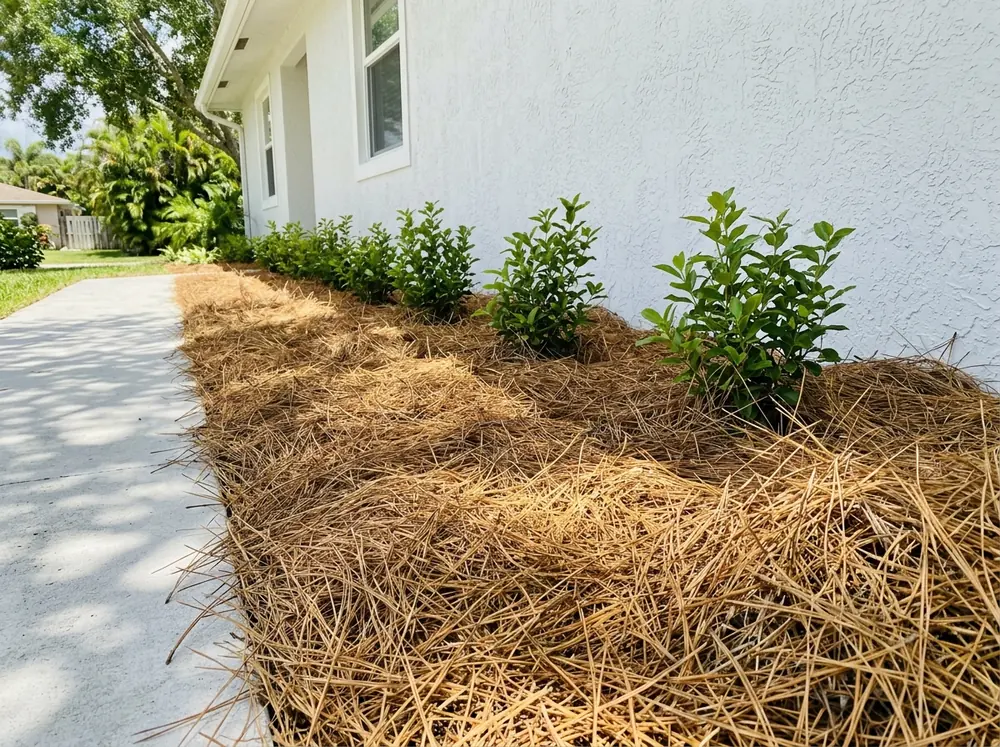
Pine straw is baled pine needles from managed forests. The needles lock together, so it stays put in a downpour better than most loose mulches, and UF/IFAS counts it among the cheapest. The trade-off is that it breaks down fast and has to be redone more often.
- Material: about $30 to $40 a cubic yard (Fixr)
- Fine needles need only 1 to 2 inches (HomeGuide)
Rubber Mulch, and the Problem With Cypress
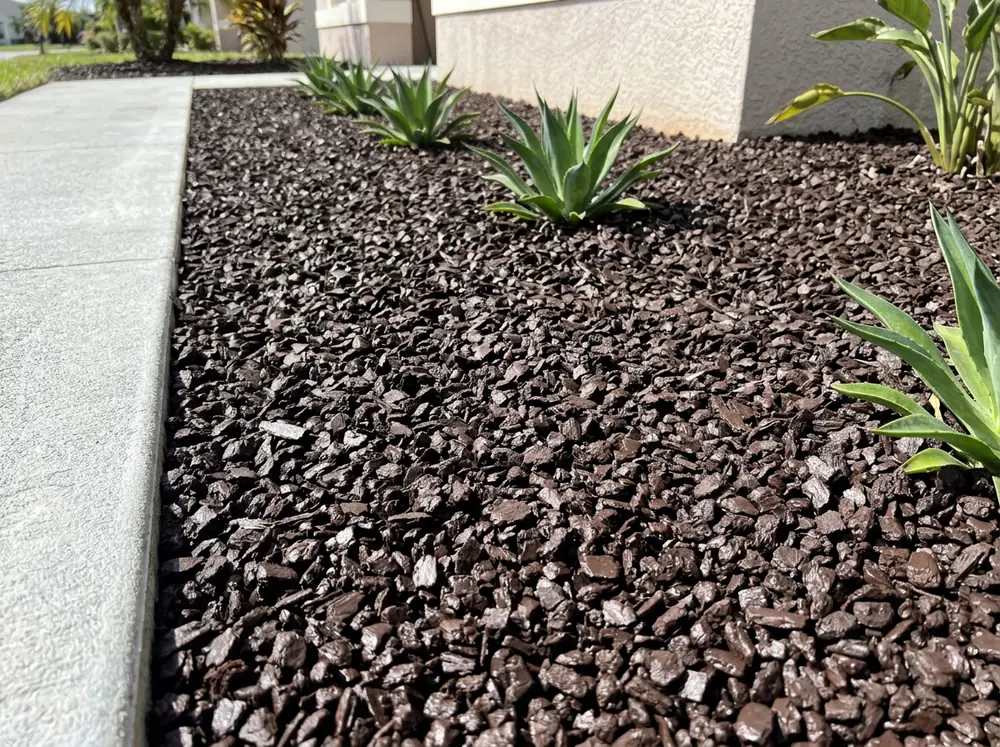
Rubber mulch costs more and lasts for years, but UF/IFAS doesn't recommend it or any other inorganic mulch for planting beds. It suppresses weeds less well than organic mulch, gets very hot underneath, and some types float off in heavy rain and leach chemicals into waterways.
- Rubber, laid: about $80 to $160 a cubic yard (Fixr)
Cypress has its own problem. HomeGuide lists it among the most popular mulches, but the Florida-Friendly Landscaping program advises against it because it can come from cypress wetlands. If a quote says cypress, ask for melaleuca or eucalyptus instead.
Why Pompano Beach homeowners call Pompano Landscaping
- One independent landscaper calls back, not a list of five
- You pay nothing to send a request
- Ask for plant species, sizes and sod square footage on the quote
- Ask who books the 811 locate and pulls any tree permit
Mulch Depth and Placement a Quote Should Spell Out
How the mulch goes down matters as much as what it is. These are UF/IFAS's numbers:
2 to 3 inches over beds
That's the target around shrubs, trees and bedding plants. Seedlings get about an inch.No more than 3 inches
A thicker layer catches rain and sprinkler water before it reaches the roots.Clear of trunks
Keep mulch about a foot back from trees and large plants and a couple of inches from small ones. Mulch heaped against a trunk ("volcano mulching") holds moisture and leads to rot.Top up below 2 inches
Add a thin layer over the old one. Stripping it all out can tear up roots near the surface.
Coverage is simple arithmetic: one cubic yard covers 324 square feet an inch deep, or 108 square feet at 3 inches. A 500-square-foot set of beds at 3 inches takes about 4.6 yards. If the quote's number is far off, ask why.
What Moves the Price of a Mulch Job
Delivery
HomeGuide says some installers bill it separately, at $50 to $150.Labor
$25 to $50 per cubic yard spread (HomeGuide), or about $55 to $75 an hour for a two-person crew (Fixr).Old mulch out
Switching materials means raking the old layer away: about $50 to $75 an hour plus $50 to $100 to dispose of it (Fixr).Fabric
Weed barrier under the mulch adds $0.05 to $0.25 a square foot for the material (HomeGuide).Rock instead
UF/IFAS keeps rock off planting beds and wants fabric under it, or it sinks into sandy soil. For paths and dry beds, see rock landscaping.
Fresh beds with new plants need more than a top-dress. Read about flower bed installation for the planting side.