St. Augustine Grass and Other Sod Types in Pompano Beach
The grass decides the price per pallet, the mowing height, the pests you'll fight and whether the lawn survives under an oak or a pool cage. UF/IFAS rates St. Augustine as fairly salt tolerant, which is why it covers most yards near the coast, but it has poor wear tolerance and thins out under daily foot traffic. Zoysia and bahia fill the gaps it leaves.
Floratam St. Augustine
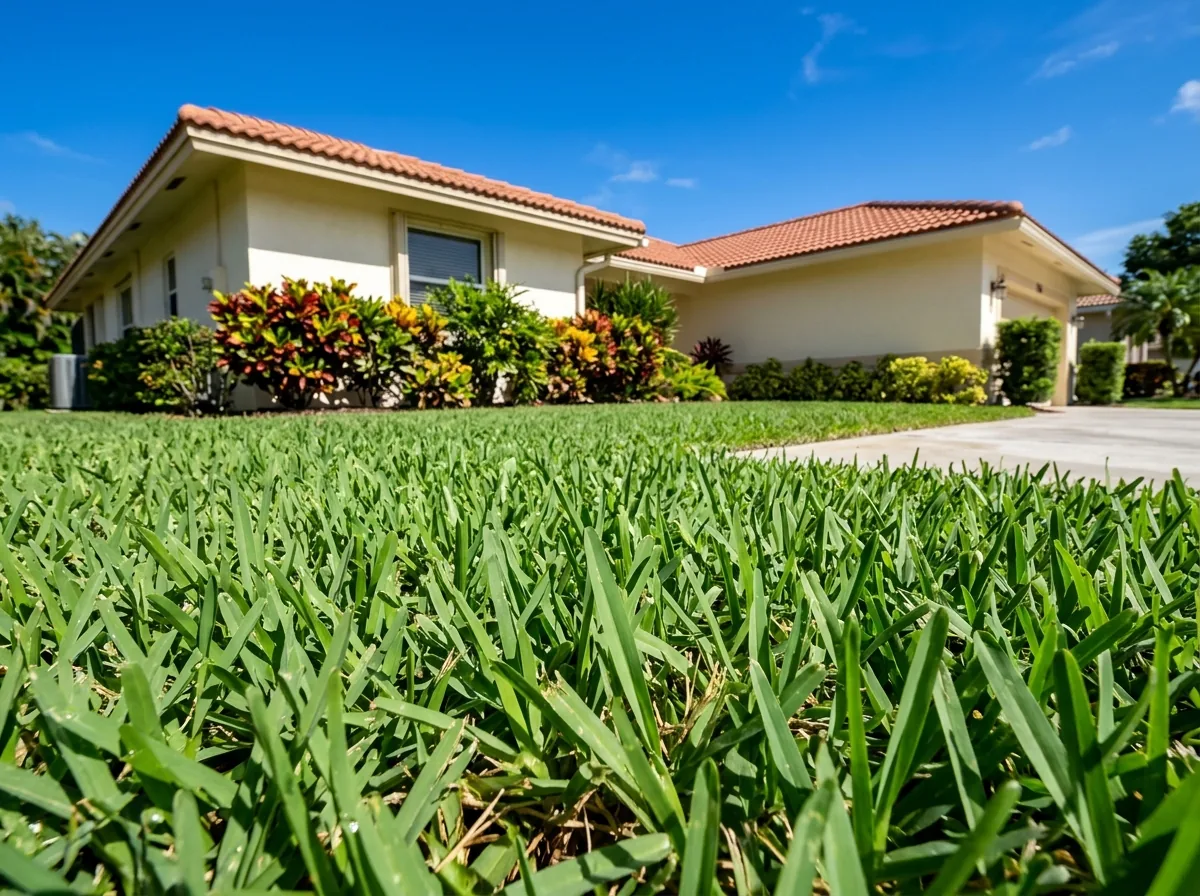
Floratam is the most widely grown and used St. Augustine in Florida. It grows hard in spring and summer and looks coarse up close. UF/IFAS lists its weak points plainly: poor shade and cold tolerance, susceptibility to gray leaf spot, and a chinch bug resistance it had at release in 1973 but has largely lost. Summer weed treatments need care too: Floratam doesn't tolerate atrazine herbicides applied above 85°F.
- Sod price: about $0.35 a square foot, or $185 to $225 a pallet, when available (HomeAdvisor)
- Needs 6 or more hours of direct sun daily
- Mowed tall; see mowing heights by grass
- Chinch bugs are now a major pest of it: what treatment involves
Shade-Tolerant St. Augustine Cultivars
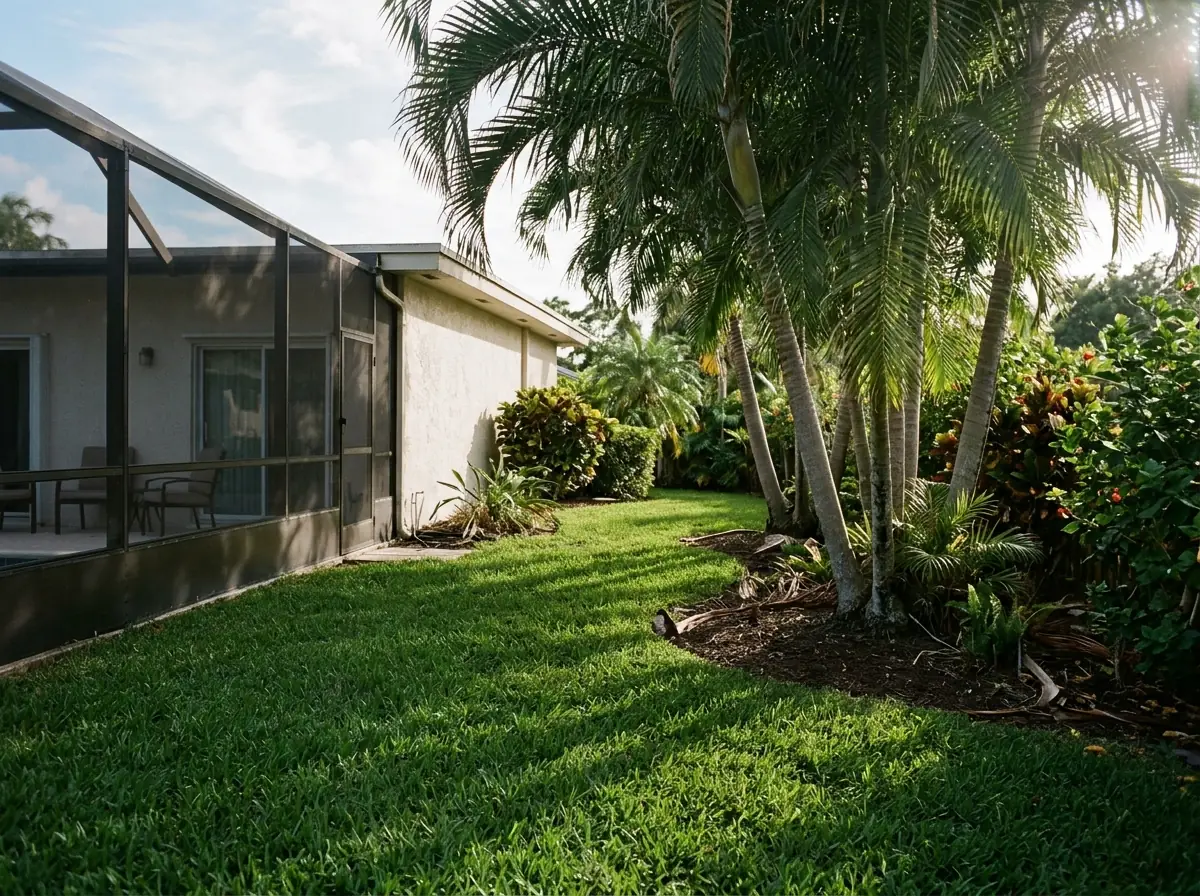
For a yard that loses the sun by early afternoon, ask the crew which of these the sod farm has on hand. UF/IFAS describes each:
- Bitterblue: fine, dense, dark blue-green, with good cold and shade tolerance.
- Palmetto: a semi-dwarf that does well in full sun or partial shade, but not dense shade. Mowed at 3 to 4 inches.
- Seville: a dwarf with fine dark leaves that performs in shade and full sun. It is cold sensitive, prone to thatch, and open to chinch bugs and webworms. Mowed at 2 to 2.5 inches.
- ProVista: built on Floratam genetics, darker, with better shade tolerance and slower growth, so it needs mowing less often. It is also the first glyphosate-tolerant turf on the market.
- CitraBlue: a University of Florida release on sale since 2018. It grows flatter and denser than Floratam, competes better with weeds, and is more drought tolerant than Floratam and Palmetto.
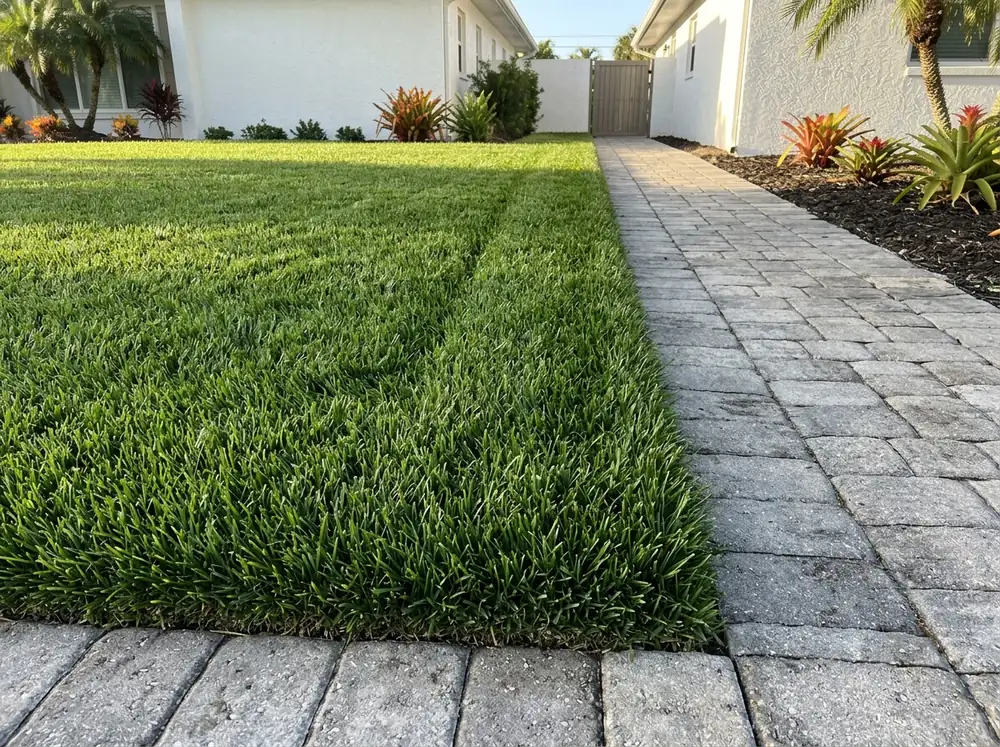
Zoysia
UF/IFAS credits zoysia with good tolerance of shade, salt and traffic, which suits a yard where kids or dogs run the same path every day. Empire is the most common zoysia in Florida; it grows very dense, has done well in sandy soil, and shades about as well as El Toro. Icon has very high salt tolerance and little thatch, and large patch disease hasn't been seen in it. Most other zoysias, Empire included, are susceptible to large patch.
- Sod price: $0.50 to $0.80 a square foot (HomeAdvisor), or $215 to $325 a pallet (Fixr)
- Slower to fill in than St. Augustine when planted as plugs: UF/IFAS spaces zoysia plugs 8 to 12 inches apart and expects at least a full season to close the gaps
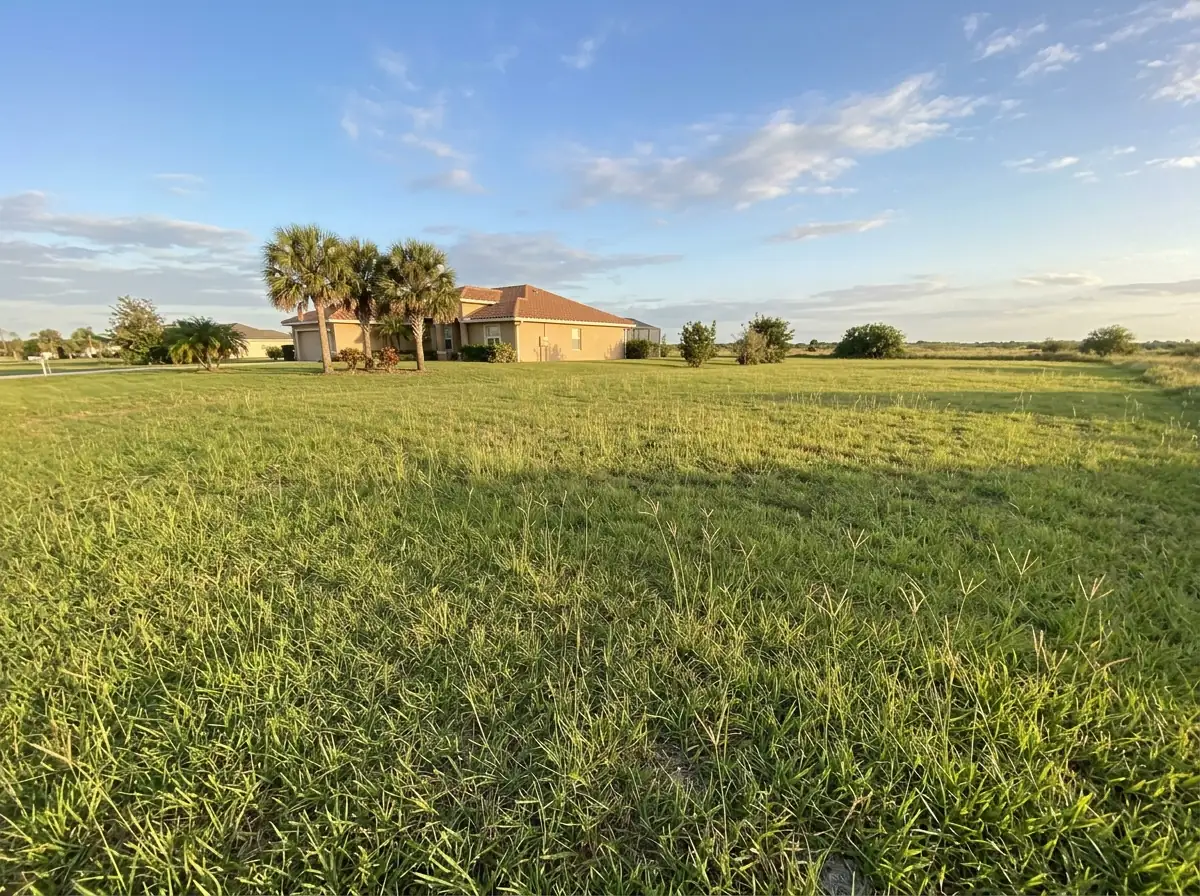
Bahia
Bahia is the budget choice, at $0.20 to $0.40 a square foot for the grass in HomeGuide's and HomeAdvisor's tables. UF/IFAS calls it a low-maintenance lawn grass with a deep root system that persists in infertile, sandy soil with little water or fertilizer, and suggests it for large lots or yards with no sprinkler system. Most bahia sod is cut from pastures and can carry hard-to-control weeds, and it doesn't always hold together as a slab. Look at the pallets before you accept the delivery.
- Mowed every 7 to 14 days at 3 to 4 inches during active growth
- Turns yellow from iron deficiency on soils above pH 7.0
- Mole crickets are its most serious insect pest
Why Pompano Beach homeowners call Pompano Landscaping
- One independent landscaper calls back, not a list of five
- You pay nothing to send a request
- Ask for plant species, sizes and sod square footage on the quote
- Ask who books the 811 locate and pulls any tree permit
Matching Sod to a Pompano Beach Yard
A lot often needs two grasses: Floratam on the sunny front lawn, a shade cultivar or zoysia along the side yard or under the palms. Ask for the quote to list the cultivar by name for each area, with the square footage and the pallet count, so a substitution can't slip in on delivery day.
Near the beach or the Intracoastal
Sandy, high-pH soil and salt spray come with the location (UF/IFAS). St. Augustine and zoysia both tolerate salt; Icon zoysia rates very high. Bahia is prone to iron-deficiency yellowing on high-pH soil. For beds next to the lawn, see salt-tolerant planting.Shade from pool cages and palms
Floratam fails under 6 hours of sun. Bitterblue, Seville, ProVista and the zoysias are the shade options UF/IFAS names.Heavy traffic
St. Augustine wears poorly. Zoysia handles traffic better.No irrigation
Bahia copes best with sandy soil and little water.
When to Lay St. Augustine Sod in South Florida
UF/IFAS gives late fall, winter and spring as the best planting window in south Florida, avoiding temperature extremes. Sod goes down on bare, moist soil in a staggered brick pattern with tight joints, then gets rolled and watered. Don't mow it until it has pegged down, usually 14 to 21 days. For its first three months, new sod can run on the new-planting watering schedule.
For the tear-out, grading and per-square-foot labor side of a new lawn, see sod installation.