Tropical Landscaping Types in Pompano Beach
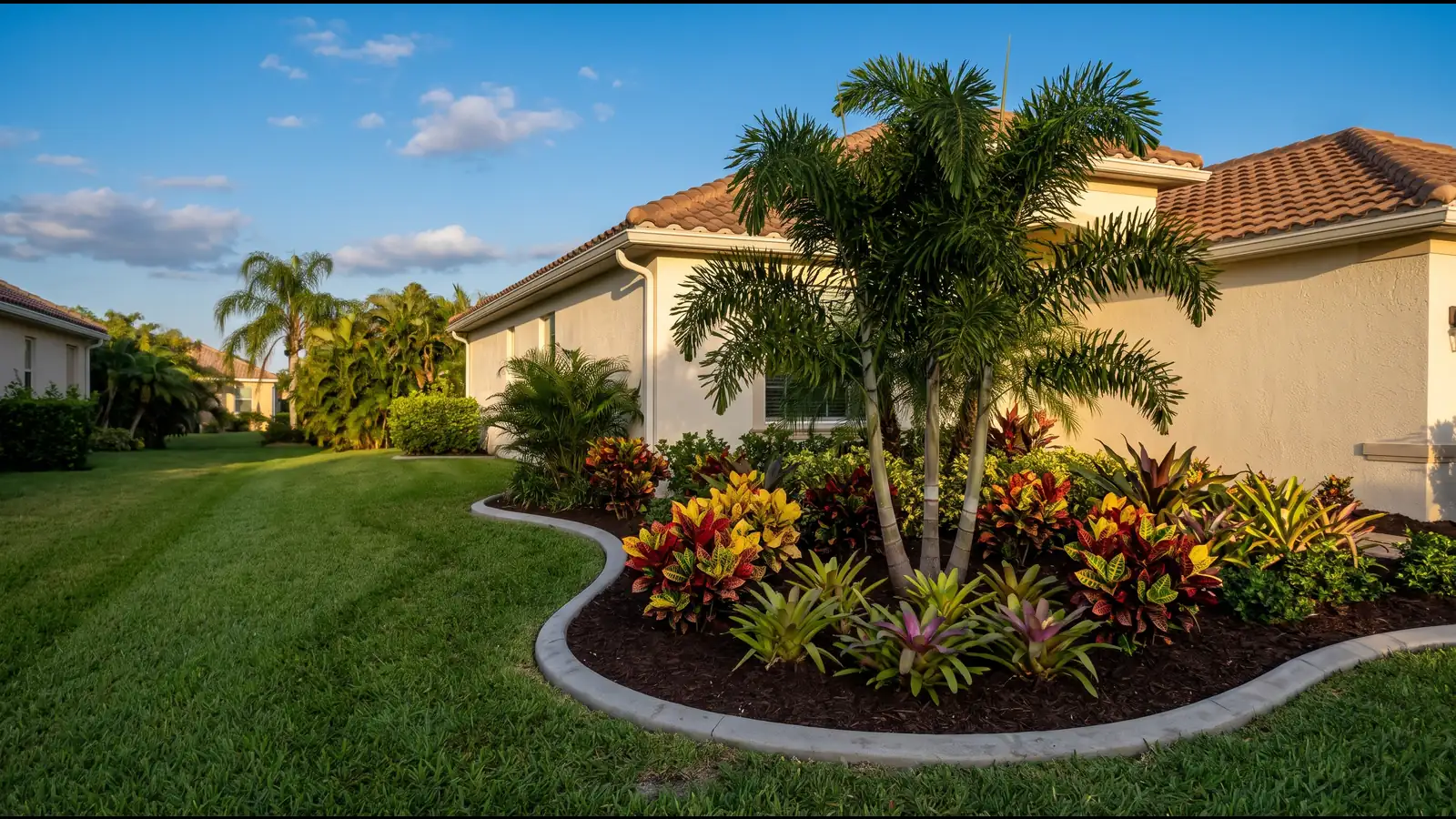
Most plants in a tropical bed are grown for their leaves. Map sun and shade before choosing: crotons color best in bright light, while ferns want shade.
Crotons and Ti Plants
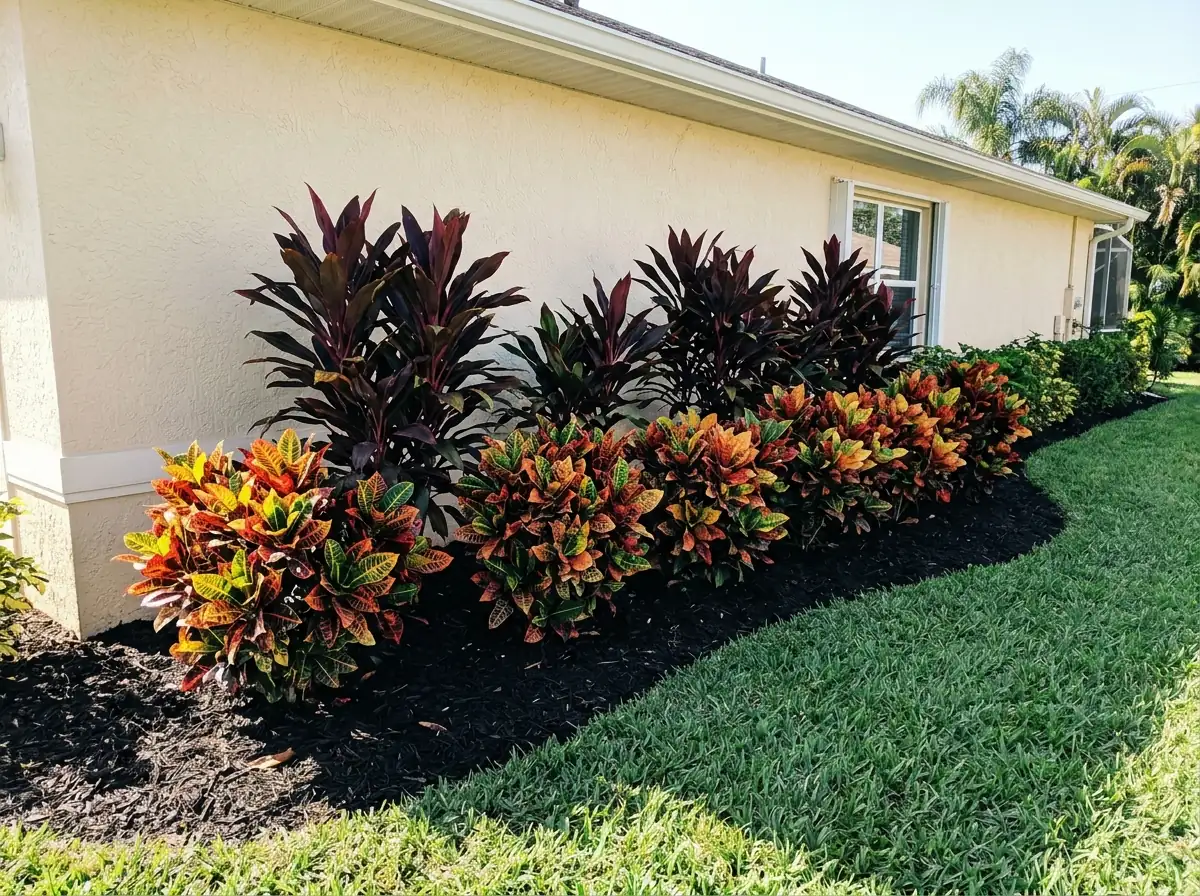
Crotons grow up to 10 feet, in dwarf and larger forms, and color best in bright sun. UF/IFAS warns their leaves are irritating and poisonous if chewed and the sap stains, so keep them away from where pets and small children play. Ti plants take full sun to deep shade, reach about 10 feet tall and 4 wide, and aren't salt tolerant.
- Crotons: 2 to 3 feet apart
- Ti plants: about 3 feet apart, in masses
Bromeliads
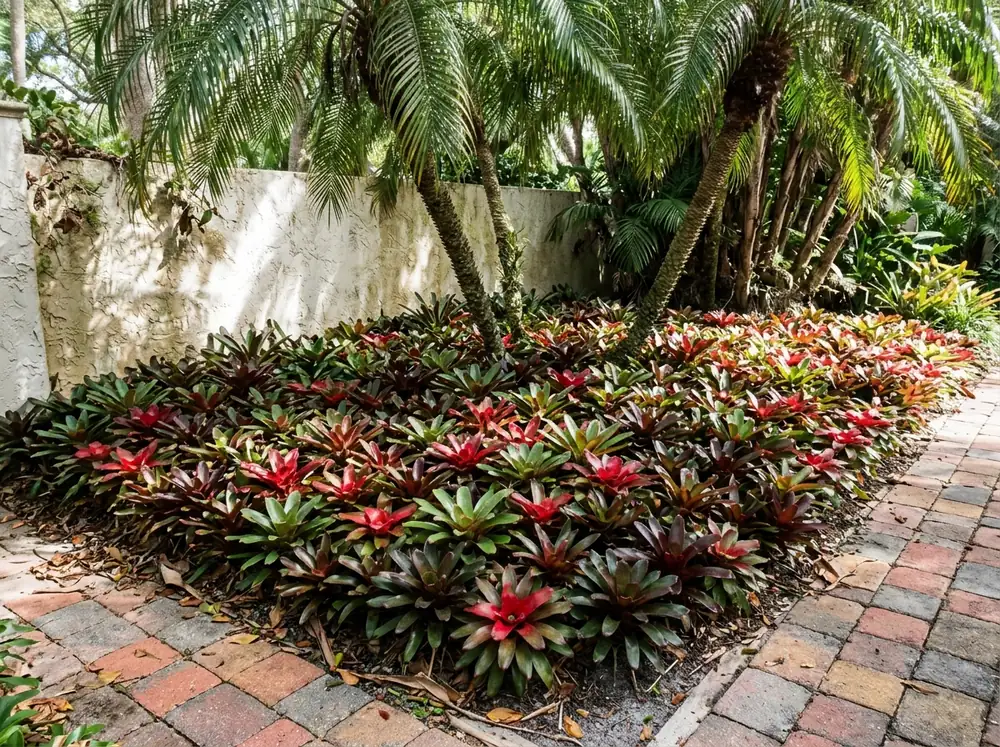
Different bromeliads come from deep shade to full sun, so match the variety to the spot. Too little light gives long, thin, greener leaves; too much gives short, pale ones. Their cups hold water that some mosquito species breed in, which means a mass planting needs regular flushing with fresh water.
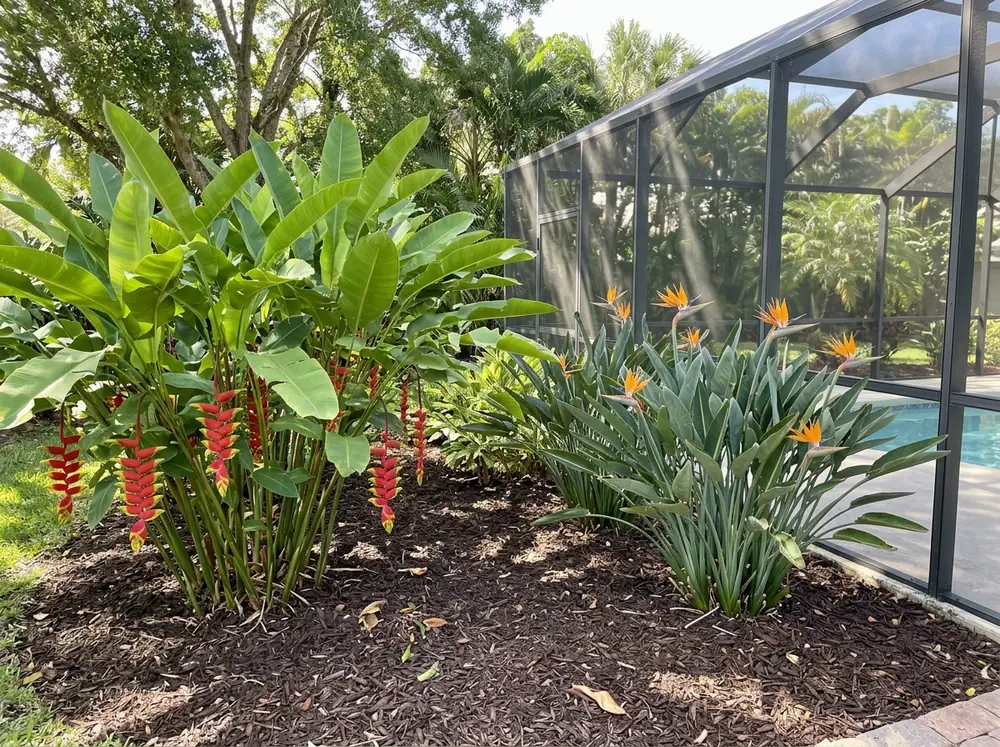
Heliconia and Bird of Paradise
Heliconia suits zones 10B to 11 and usually stands 5 to 6 feet in Florida landscapes; lobster claw is the best known. It needs fertile, moist soil, so sandy beds get compost tilled in first, and some species spread unless a root barrier goes in. Bird of paradise stays 3 to 5 feet tall and 2 to 4 wide, takes only light salt spray, and drops little litter.
- Bird of paradise: about 6 feet apart for full flowering
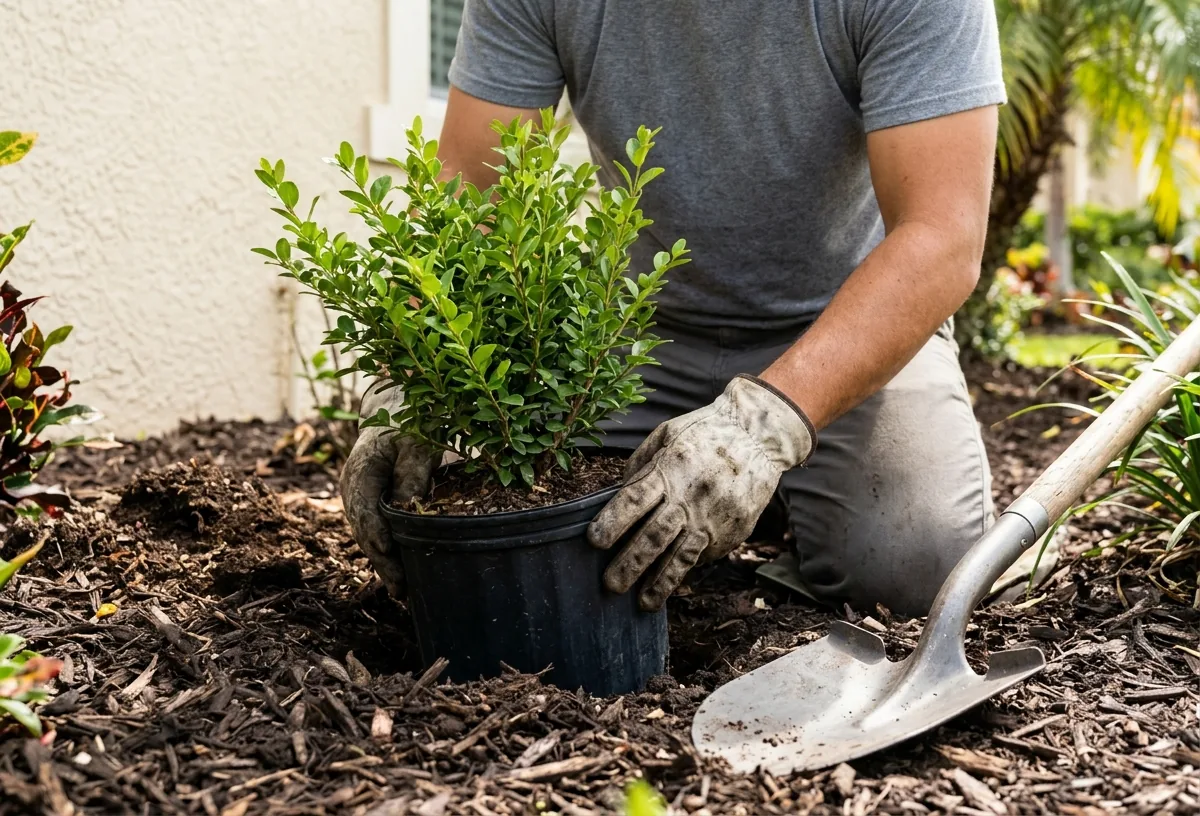
- Plant hole two to three times the root ball's width, no deeper than the ball
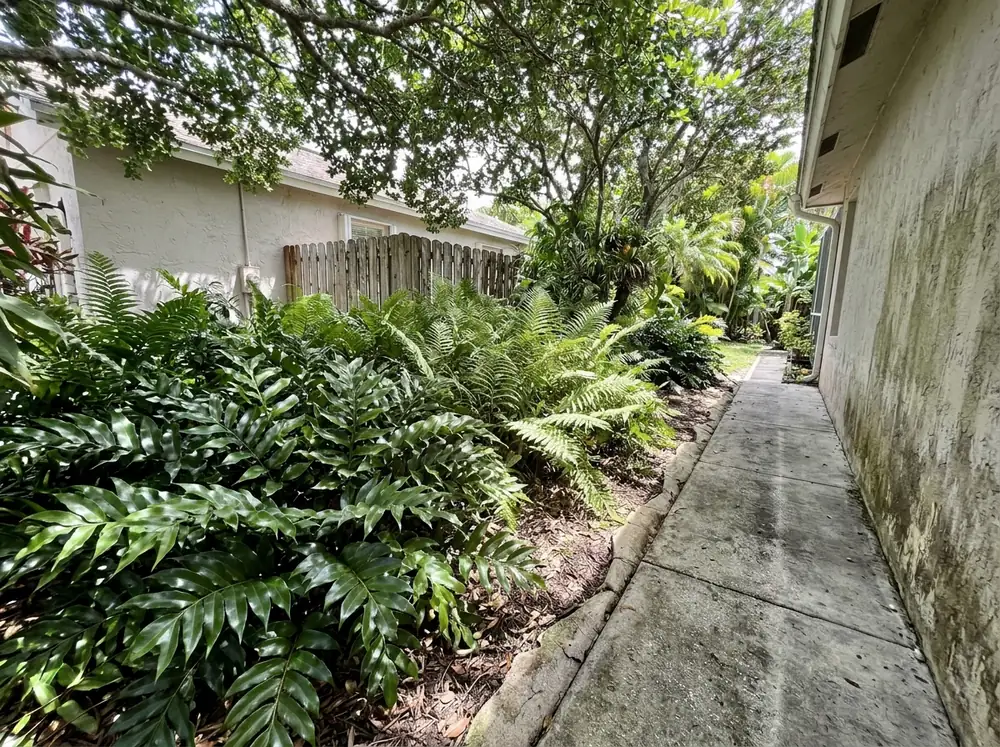
Ferns and Shade Plants
Ferns cover the ground under shade trees. Holly fern copes with dry spells in the shade of trees, and southern shield fern, a native, fills in as a groundcover about 3 to 4 feet tall. Tree ferns reach 15 to 30 feet in South Florida. UF/IFAS suggests planting several in broad sweeps.
Why Pompano Beach homeowners call Pompano Landscaping
- One independent landscaper calls back, not a list of five
- You pay nothing to send a request
- Ask for plant species, sizes and sod square footage on the quote
- Ask who books the 811 locate and pulls any tree permit
Tropical Beds Near Pools and Patios
Near a pool, leaf litter and sap matter. Bird of paradise works next to pools and patios because it causes little leaf litter. Crotons are a poor choice right beside a play area because of their sap and leaves. Bromeliads near a lanai need their cups flushed so they don't breed mosquitoes. For the full pool-area plan, see pool landscaping.
Salt, Soil and Shade Checks for Tropical Plants
Salt
Ti plants have no salt tolerance and bird of paradise takes only light spray. Closer to the ocean, start from a salt-tolerant plant list.Soil
Heliconia needs compost worked into sandy soil before planting. Bird of paradise in hard or poorly drained ground goes in half as deep with soil mounded around the root ball.Watering in
New beds qualify for the city's extra watering days for 90 days.Adding a palm
Species prices and planting standards are on the palm installation page.